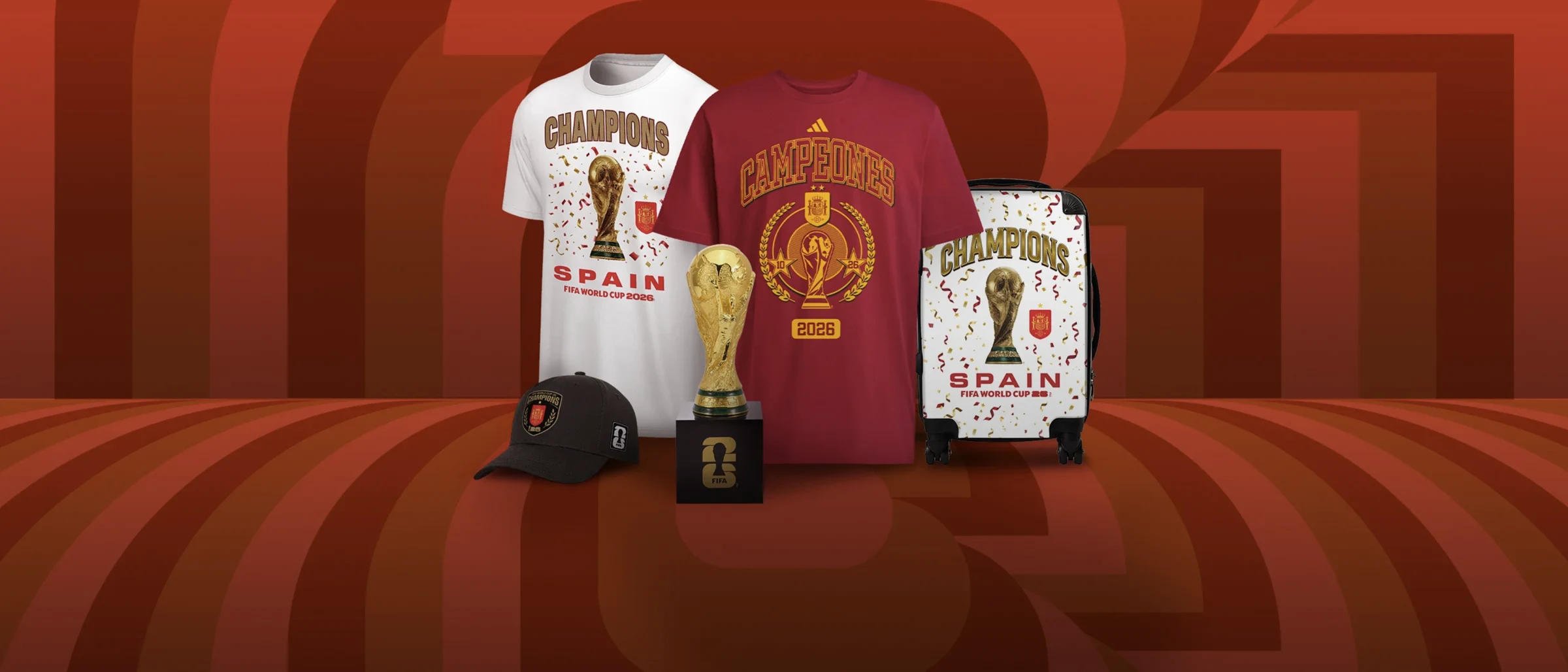
A second star is a small piece of embroidery. It is also sixteen years of waiting made visible.
Spain beat Argentina 1-0 after extra time on July 19, 2026. Ferran Torres scored in the 106th minute. The finish decided a final; the star above the crest changed every Spain shirt that will follow it.
That is the difference between a tournament shirt and the shirt after a tournament. One carries hope. The other carries proof.
The first star never really left 2010
Spain supporters already knew what an extra-time World Cup winner feels like. In 2010, Andres Iniesta scored against the Netherlands in the 116th minute. His celebration became the image that held an entire era together: Xavi, Casillas, Villa, Puyol, Busquets, and a national side that made control feel like courage.
The first star belonged to that generation for so long that it started to feel like a signature rather than a count. A Spain shirt with one star did not simply say world champion. It said South Africa, late-night summer matches, the blue away shirt in the final, and Iniesta running toward the corner.
Sixteen years is long enough for a child in 2010 to become the adult buying the next shirt. It is also long enough for younger supporters to know the first title only through replay clips and stories from their families.
Then the clock passed 90 again
The 2026 final did not offer an easy coronation. Spain and Argentina reached extra time without a goal. The match had already become the kind of final where every loose touch feels permanent and every substitution looks like it might decide a country’s next four years.
Ferran Torres found the goal in the 106th minute. It was not a decorative third goal in a comfortable win. It was the only one, scored when the margin between champion and runner-up had narrowed to a single movement.
That gives the 2026 shirt its own emotional shape. The 2010 shirt belongs to the breakthrough. The 2026 shirt belongs to return: proof that Spain could build another champion without asking the old team to come back and do it for them.
Why two stars change the shirt
Football shirts are excellent at carrying time. A sponsor, collar, number style, sleeve badge, or star can place a shirt in a specific season before anyone reads the label. The second star is the cleanest marker of all.
For collectors, one-star Spain shirts now form a closed chapter. They cover the years after 2010 and before the 2026 final. They have not become obsolete; they have become dated in the best sense. Each one now belongs unmistakably to the period when Spain had won the World Cup once.
The first two-star shirts begin a different chapter. Some supporters will remember the exact room, bar, sofa, or group chat where they watched Torres score. Others will buy the shirt later and inherit the story. Both are normal ways for football memory to travel.
A title that sits beside another one
There is another reason the 2026 win matters. Spain became the first country to hold the men’s and women’s world titles at the same time. The men’s second star therefore arrived while the women’s 2023 victory was still part of the present, not a distant chapter.
That does not make the two teams the same story. It makes the moment larger. Spain’s football identity in 2026 cannot be reduced to nostalgia for one golden men’s generation. The country’s recent world-title memory now runs through two teams and two tournaments.
Buy the shirt for the reason you will remember
A championship shirt can be a celebration piece, a match shirt, or the start of a collection. There is no need to pretend every purchase is an investment. Most shirts become valuable first because someone wore them, photographed them, or kept them through a season that mattered.
If you lived through the final, the useful question is simple: which version looks like your memory of that summer? Red may feel immediate. The away color may feel more distinctive. A name and number can make the shirt about one player; leaving it blank can make it about the whole team.
Years from now, the small second star will do most of the explaining. It will say that the shirt came after Ferran Torres scored in extra time, after Spain had waited sixteen years, and after one famous generation finally had company.
One star remembers the breakthrough. Two stars remember that Spain found the way back.KitFlows Editorial