Football Journal
The shirts behind Senegal's modern football story
Three football moments explain the modern Senegal shirt: the 2002 breakthrough, a first AFCON title, and a 2026 design drawn from Dakar's Car Rapide minibuses.
In this guide
Senegal's flag is green, gold and red. Its football shirts use those colours too, but often against a white home base. White is not a flag colour, and there is no need to invent a rule to explain it. The clearer story is visual: a white shirt accompanied Senegal's 2002 breakthrough, while green and red remain central to the current range.
2002: the white shirt the world remembers
Senegal arrived at Korea/Japan 2002 as World Cup debutants. Their first match could hardly have carried more weight: defending champions France in the tournament opener, on 31 May in Seoul.
Papa Bouba Diop scored the only goal. Senegal won 1-0, then went on to reach the quarter-finals. FIFA still treats that run as the benchmark in the country's World Cup story. Aliou Cissé, later Senegal's national-team coach, captained the side.
The shirt became part of the memory because the moment was so large. Football Kit Archive, a secondary visual database, catalogues Senegal's 2002 home jersey as white. That evidence is useful for identifying the kit, but it does not prove that every Senegal home shirt followed the same formula before or after the tournament.
What it does show is simpler. For a generation of supporters outside Senegal, the team's first globally familiar image was a white shirt on the night France were beaten.
2021: the national shirt finally meets a trophy
Nearly two decades later, Cissé stood beside the same national colours in a different role. As head coach, he led Senegal to the country's first Africa Cup of Nations title.
The 2021 final against Egypt finished 0-0 after extra time. Senegal won the penalty shoot-out. CAF records it as the country's first continental championship, while FIFA connects the victory directly to Cissé's journey from captain of the 2002 team to coach of the champions.
That history matters more than a sleeve pattern or collar shape. The shirt worn during a first title gathers meaning that design notes cannot manufacture. It becomes attached to the wait, the missed chances in earlier tournaments and, finally, the release of winning one.
This article does not assign colours or construction details to the final without a reliable kit source. The point of 2021 is the emotional change: Senegal's national jersey was no longer linked only to a famous upset and a brilliant World Cup run. It was now the shirt of African champions.
2026: Dakar enters the design
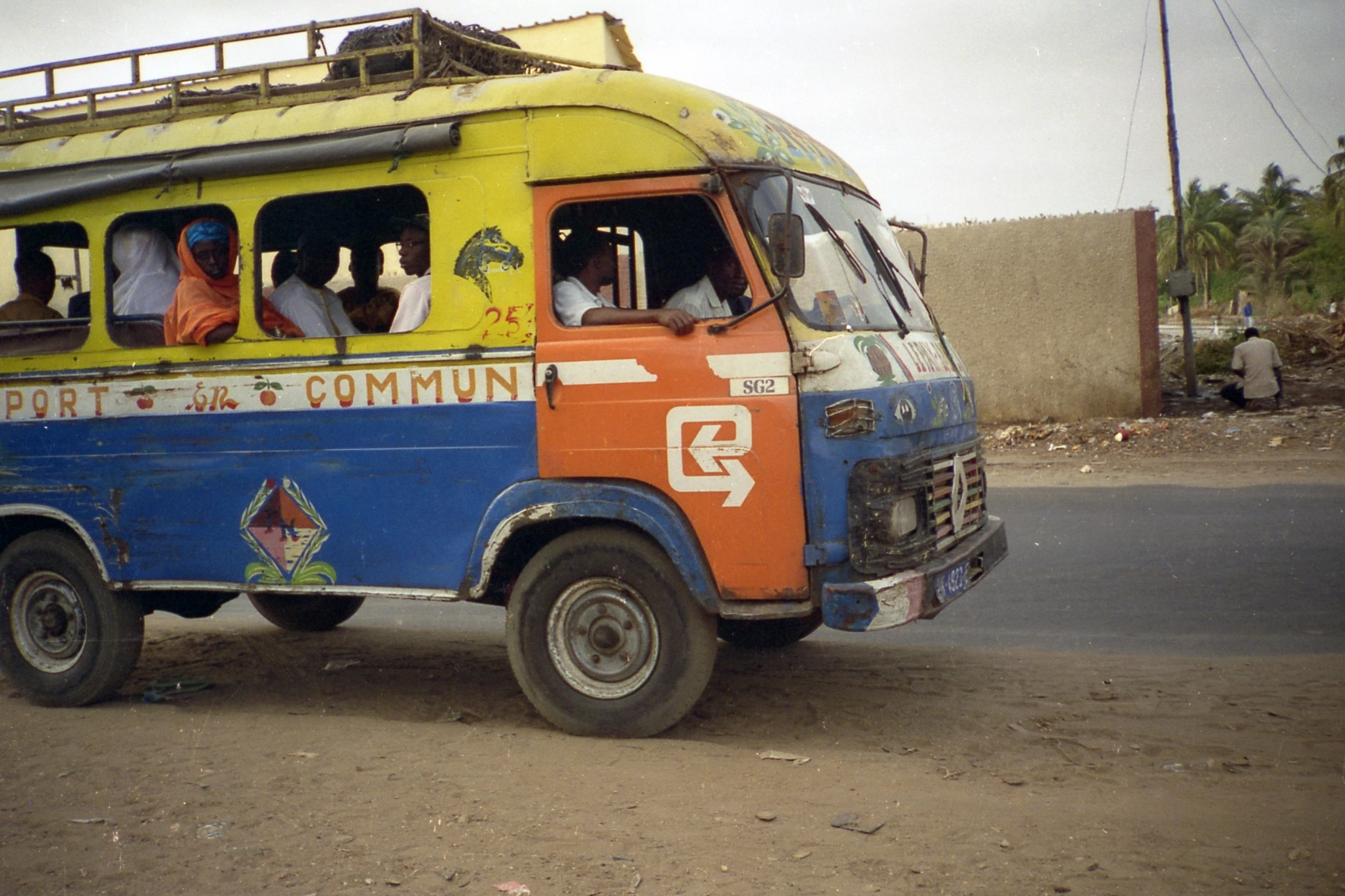
PUMA names the 2026 home colourway PUMA White-Wild Green. The company says the design takes its inspiration from Dakar's hand-painted Car Rapide minibuses, brightly decorated vehicles that turn everyday public transport into moving street art.
That reference gives the shirt a sense of place. It is not a generic claim about “African colour” or an abstract pattern added after the fact. PUMA points to something recognisably Dakar: painted panels, strong colour and the visual energy of the street.
The current PUMA collection keeps the contrast clear. Its home range is white and green; the away range uses Wild Green with PUMA Red. The colours are familiar, but the Car Rapide explanation makes the 2026 home shirt specific to Senegal rather than merely national-team themed.
PUMA's product story remains a brand's own explanation of its design. A photograph of an actual Car Rapide is therefore a better editorial companion than another studio product image: it lets the reader see the source material and judge the connection.
Continuity without a made-up uniform rule
Kit histories are often tidied into a single formula after the fact. Senegal's is better understood through a handful of documented moments.
The Presidency of Senegal defines the flag as three equal vertical bands of green, gold and red. A secondary kit archive records national-team shirts from 1965 onward and shows white appearing as a recurring home base. FIFA documents the white-shirted 2002 team through its tournament coverage. PUMA's 2026 range again pairs white with green at home, then gives green and red greater weight away.
Together, those sources show continuity, but not perfect repetition. Templates change. The balance of colour shifts. What remains recognisable is the conversation between a calm white field and the stronger national colours around it.
For readers who want to move from the story to the current range, KitFlows keeps its available Senegal jerseys and fan gear on one team page.
See the current Senegal shirts
Move from the story to the home and away shirts currently available at KitFlows.
Frequently asked questions
Why does Senegal wear white if white is not on the flag?
The available sources do not establish one official reason. What they do show is that white has repeatedly served as a home-shirt base, including in the visual record of 2002 and PUMA's 2026 range. Green, gold and red come from the flag; white gives those stronger colours space to stand out.
What happened to Senegal at the 2002 World Cup?
Senegal made its World Cup debut, beat defending champions France 1-0 in the opening match and reached the quarter-finals. It remains the country's best World Cup finish.
What is the Car Rapide reference in the 2026 jersey?
PUMA says the home design draws from Dakar's hand-painted Car Rapide minibuses. The reference links the shirt to a familiar part of the capital's street life rather than relying on flag colours alone.